Buy dunaihajout.eu ?
We are moving the project
dunaihajout.eu .
Are you interested in purchasing the domain
dunaihajout.eu ?
domain@kv-gmbh.de · 0541-91531010
Buy dunaihajout.eu ?
How do you calculate the marginal density and the joint density?
To calculate the marginal density of a random variable, you integrate the joint density function over all possible values of the other random variables. For example, to find the marginal density of X in a joint density function f(x,y), you would integrate f(x,y) with respect to y. To calculate the joint density of two random variables, you multiply the marginal densities of each variable together. For example, if X and Y are independent random variables with marginal densities f(x) and g(y) respectively, then the joint density function is given by h(x,y) = f(x) * g(y). In summary, to calculate the marginal density, integrate the joint density over all possible values of the other random variables, and to calculate the joint density, multiply the marginal densities of each variable together. **
How do you calculate density in mathematics and what is density?
Density is a measure of how much mass is contained in a given volume. In mathematics, density is calculated by dividing the mass of an object by its volume. The formula for density is: density = mass/volume. This calculation allows us to determine how tightly packed the particles of a substance are, and it is commonly used in physics and engineering to describe the properties of materials. **

Similar search terms for Density
Top-Angebote
Products related to Density:
-
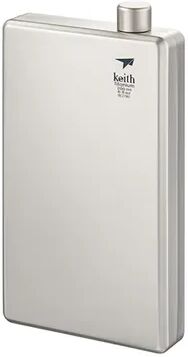
Smart Shopping Spot Camping Hip Flask Portable Titanium Flask For Travel, Hiking & Outdoor Use Camping Hip Flask Portable Titanium Flask For Travel, Hiking & Outdoor UseEnjoy your favorite drink wherever adventure takes you with this sleek titanium flask designed for modern explorers. Crafted for campers, hikers, and travelers, it combines ultralight durability with a clean, minimalist design. Unlike traditional...129,97 $*Shipping: 0,00 $Secure redirect to the provider
-
Perfect Picks Market Multifunctional Cutlery Set Portable Outdoor Tableware For Camping, Hiking, And Travel Multifunctional Cutlery Set Portable Outdoor Tableware For Camping, Hiking, And TravelUpgrade your outdoor meals with the 6in1 multifunctional cutlery set designed for campers, hikers, and travelers. This compact, portable tableware is all you need to enjoy a hasslefree dining experience in nature. Featuring a knife, fork, spoon, and...39,97 $*Shipping: 0,00 $Secure redirect to the provider
-
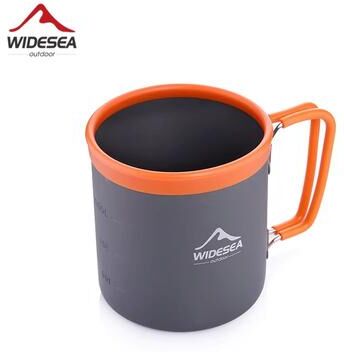
Inspired Finds Widesea Lightweight Aluminum Camping Mug Durable Outdoor Cup For Hiking, Trekking & Travel Widesea Lightweight Aluminum Camping Mug Durable Outdoor Cup For Hiking, Trekking & TravelEnjoy your favorite drink wherever adventure takes you with this versatile aluminum camping cup built for the outdoors. Designed to be lightweight yet durable, its the perfect companion for hikers, trekkers, and travelers who value practicality...34,99 $*Shipping: 0,00 $Secure redirect to the provider
-
Tools, Home & Hobby Warm Wool Camping Blanket Large Waterproof Outdoor Blanket For Hiking Travel And Picnics Warm Wool Camping Blanket Large Waterproof Outdoor Blanket For Hiking Travel And PicnicsStay warm and comfortable wherever your adventures take you with this premium wool camping blanket designed for outdoor relaxation and coldweather activities. Made with an 80% wool blend, it provides excellent insulation, durability, and breathable...99,97 $*Shipping: 0,00 $Secure redirect to the provider



-
What is individual density?
Individual density refers to the number of individuals of a particular species within a given area or habitat. It is a measure of how crowded or dispersed a population is within a specific area. Individual density can have significant impacts on factors such as competition for resources, predation, and overall population dynamics. Monitoring individual density is important for understanding the health and sustainability of a population within an ecosystem. **
-
How is density calculated?
Density is calculated by dividing the mass of an object by its volume. The formula for density is: Density = Mass / Volume. Mass is typically measured in grams or kilograms, while volume is measured in cubic centimeters or cubic meters. By dividing the mass by the volume, we can determine how much mass is present in a given volume, which gives us the density of the object. **
-
What is relative density?
Relative density, also known as specific gravity, is the ratio of the density of a substance to the density of a reference substance. It is a dimensionless quantity that compares the density of a substance to the density of water at a specific temperature. Relative density is used to characterize the heaviness or lightness of a substance compared to water, and it is commonly used in various scientific and industrial applications to determine the purity or composition of materials. **
-
How can the density of cola be measured and what is density?
The density of cola can be measured by using a graduated cylinder and a scale. First, the mass of a known volume of cola is measured using the scale. Then, the volume of the cola is measured by pouring it into the graduated cylinder and recording the volume. Density is a measure of how much mass is contained in a given volume and is calculated by dividing the mass by the volume. In the case of cola, the density can be used to determine the amount of sugar and other dissolved substances in the liquid. **
Which of the Greek islands has the highest cat density or dog density?
It is difficult to determine which Greek island has the highest cat or dog density as this information is not readily available or documented. However, islands with larger populations and more urban areas may have higher densities of cats and dogs due to human habitation and potential abandonment of pets. Islands like Crete, Rhodes, or Corfu, which are popular tourist destinations with larger populations, may have higher cat or dog densities compared to smaller, more remote islands. **
What is the difference between electron density and electron state density in physics?
Electron density refers to the distribution of electrons in a given volume of space, and is typically represented by a probability density function. It describes the likelihood of finding an electron at a particular location within an atom or molecule. On the other hand, electron state density, also known as the density of states, refers to the number of electron energy states per unit volume or per unit energy range. It provides information about the distribution of available energy levels for electrons in a material, and is often used in the study of solid-state physics and semiconductor devices. **
Top-Angebote
Products related to Density:
-
Perfect Picks Market Kids Explorer Kit, Bug Catcher, Binoculars, Outdoor Exploration Kit For Hiking, Camping, Educational Toy For Kids Kids Explorer Kit, Bug Catcher, Binoculars, Outdoor Exploration Kit For Hiking, Camping, Educational Toy For KidsExplore the Outdoors with the 11PCS Kids Explorer Kit The 11PCS Kids Explorer Kit with Binoculars is the perfect set for your little adventurer. Designed to spark curiosity, this bug catcher outdoor exploration kit includes everything kids need for...129,97 $*Shipping: 0,00 $Secure redirect to the provider
-
Smart Shopping Spot Camping Hip Flask Portable Titanium Flask For Travel, Hiking & Outdoor Use Camping Hip Flask Portable Titanium Flask For Travel, Hiking & Outdoor UseEnjoy your favorite drink wherever adventure takes you with this sleek titanium flask designed for modern explorers. Crafted for campers, hikers, and travelers, it combines ultralight durability with a clean, minimalist design. Unlike traditional...129,97 $*Shipping: 0,00 $Secure redirect to the provider
-
Perfect Picks Market Multifunctional Cutlery Set Portable Outdoor Tableware For Camping, Hiking, And Travel Multifunctional Cutlery Set Portable Outdoor Tableware For Camping, Hiking, And TravelUpgrade your outdoor meals with the 6in1 multifunctional cutlery set designed for campers, hikers, and travelers. This compact, portable tableware is all you need to enjoy a hasslefree dining experience in nature. Featuring a knife, fork, spoon, and...39,97 $*Shipping: 0,00 $Secure redirect to the provider
-
How do you calculate the marginal density and the joint density?
To calculate the marginal density of a random variable, you integrate the joint density function over all possible values of the other random variables. For example, to find the marginal density of X in a joint density function f(x,y), you would integrate f(x,y) with respect to y. To calculate the joint density of two random variables, you multiply the marginal densities of each variable together. For example, if X and Y are independent random variables with marginal densities f(x) and g(y) respectively, then the joint density function is given by h(x,y) = f(x) * g(y). In summary, to calculate the marginal density, integrate the joint density over all possible values of the other random variables, and to calculate the joint density, multiply the marginal densities of each variable together. **
-
How do you calculate density in mathematics and what is density?
Density is a measure of how much mass is contained in a given volume. In mathematics, density is calculated by dividing the mass of an object by its volume. The formula for density is: density = mass/volume. This calculation allows us to determine how tightly packed the particles of a substance are, and it is commonly used in physics and engineering to describe the properties of materials. **
-
What is individual density?
Individual density refers to the number of individuals of a particular species within a given area or habitat. It is a measure of how crowded or dispersed a population is within a specific area. Individual density can have significant impacts on factors such as competition for resources, predation, and overall population dynamics. Monitoring individual density is important for understanding the health and sustainability of a population within an ecosystem. **
-
How is density calculated?
Density is calculated by dividing the mass of an object by its volume. The formula for density is: Density = Mass / Volume. Mass is typically measured in grams or kilograms, while volume is measured in cubic centimeters or cubic meters. By dividing the mass by the volume, we can determine how much mass is present in a given volume, which gives us the density of the object. **
Similar search terms for Density
-
Inspired Finds Widesea Lightweight Aluminum Camping Mug Durable Outdoor Cup For Hiking, Trekking & Travel Widesea Lightweight Aluminum Camping Mug Durable Outdoor Cup For Hiking, Trekking & TravelEnjoy your favorite drink wherever adventure takes you with this versatile aluminum camping cup built for the outdoors. Designed to be lightweight yet durable, its the perfect companion for hikers, trekkers, and travelers who value practicality...34,99 $*Shipping: 0,00 $Secure redirect to the provider
-
Tools, Home & Hobby Warm Wool Camping Blanket Large Waterproof Outdoor Blanket For Hiking Travel And Picnics Warm Wool Camping Blanket Large Waterproof Outdoor Blanket For Hiking Travel And PicnicsStay warm and comfortable wherever your adventures take you with this premium wool camping blanket designed for outdoor relaxation and coldweather activities. Made with an 80% wool blend, it provides excellent insulation, durability, and breathable...99,97 $*Shipping: 0,00 $Secure redirect to the provider
-
Inspired Finds Widesea Lightweight Camping Aluminum Cup Durable Outdoor Mug For Hiking, Trekking, And Travel Adventures Widesea Lightweight Camping Aluminum Cup Durable Outdoor Mug For Hiking, Trekking, And Travel AdventuresEnjoy your favorite drink anywhere with the camping aluminum cup built for rugged adventures and everyday outdoor use. The Widesea outdoor mug is crafted from highquality, lightweight aluminum thats easy to pack, durable enough for the trail, and...37,99 $*Shipping: 0,00 $Secure redirect to the provider
-
Inspired Finds Widesea Titanium Camping Mug Durable Outdoor Cookware For Travel & Hiking 300mlElevate your outdoor adventures with the Widesea Titanium Camping Mug, a lightweight yet durable solution for your travel cooking and outdoor tableware needs. Designed for campers, hikers, and tourists, this versatile mug offers exceptional strength...63,99 $*Shipping: 0,00 $Secure redirect to the provider
-
What is relative density?
Relative density, also known as specific gravity, is the ratio of the density of a substance to the density of a reference substance. It is a dimensionless quantity that compares the density of a substance to the density of water at a specific temperature. Relative density is used to characterize the heaviness or lightness of a substance compared to water, and it is commonly used in various scientific and industrial applications to determine the purity or composition of materials. **
-
How can the density of cola be measured and what is density?
The density of cola can be measured by using a graduated cylinder and a scale. First, the mass of a known volume of cola is measured using the scale. Then, the volume of the cola is measured by pouring it into the graduated cylinder and recording the volume. Density is a measure of how much mass is contained in a given volume and is calculated by dividing the mass by the volume. In the case of cola, the density can be used to determine the amount of sugar and other dissolved substances in the liquid. **
-
Which of the Greek islands has the highest cat density or dog density?
It is difficult to determine which Greek island has the highest cat or dog density as this information is not readily available or documented. However, islands with larger populations and more urban areas may have higher densities of cats and dogs due to human habitation and potential abandonment of pets. Islands like Crete, Rhodes, or Corfu, which are popular tourist destinations with larger populations, may have higher cat or dog densities compared to smaller, more remote islands. **
-
What is the difference between electron density and electron state density in physics?
Electron density refers to the distribution of electrons in a given volume of space, and is typically represented by a probability density function. It describes the likelihood of finding an electron at a particular location within an atom or molecule. On the other hand, electron state density, also known as the density of states, refers to the number of electron energy states per unit volume or per unit energy range. It provides information about the distribution of available energy levels for electrons in a material, and is often used in the study of solid-state physics and semiconductor devices. **
* All prices are inclusive of VAT and, if applicable, plus shipping costs. The offer information is based on the details provided by the respective shop and is updated through automated processes. Real-time updates do not occur, so deviations can occur in individual cases. ** Note: Parts of this content were created by AI.